
Authentication
How to check jewelry: hallmarks, clasps and stones
Read hallmarks, test metal safely at home, check clasps and settings, and know what a diamond grading report can and cannot tell you.
In short
- Most precious metal jewelry is stamped with its fineness, and often with a maker's mark.
- A grading report from a recognised laboratory describes a stone's weight, colour, clarity and cut.
- Jewelry is small and shiny: use soft, indirect light and tap to focus on the stamp itself.
Read the hallmarks
Most precious metal jewelry is stamped with its fineness, and often with a maker's mark. You will usually find the stamps inside a ring band, on a clasp or on a small tag near the clasp.
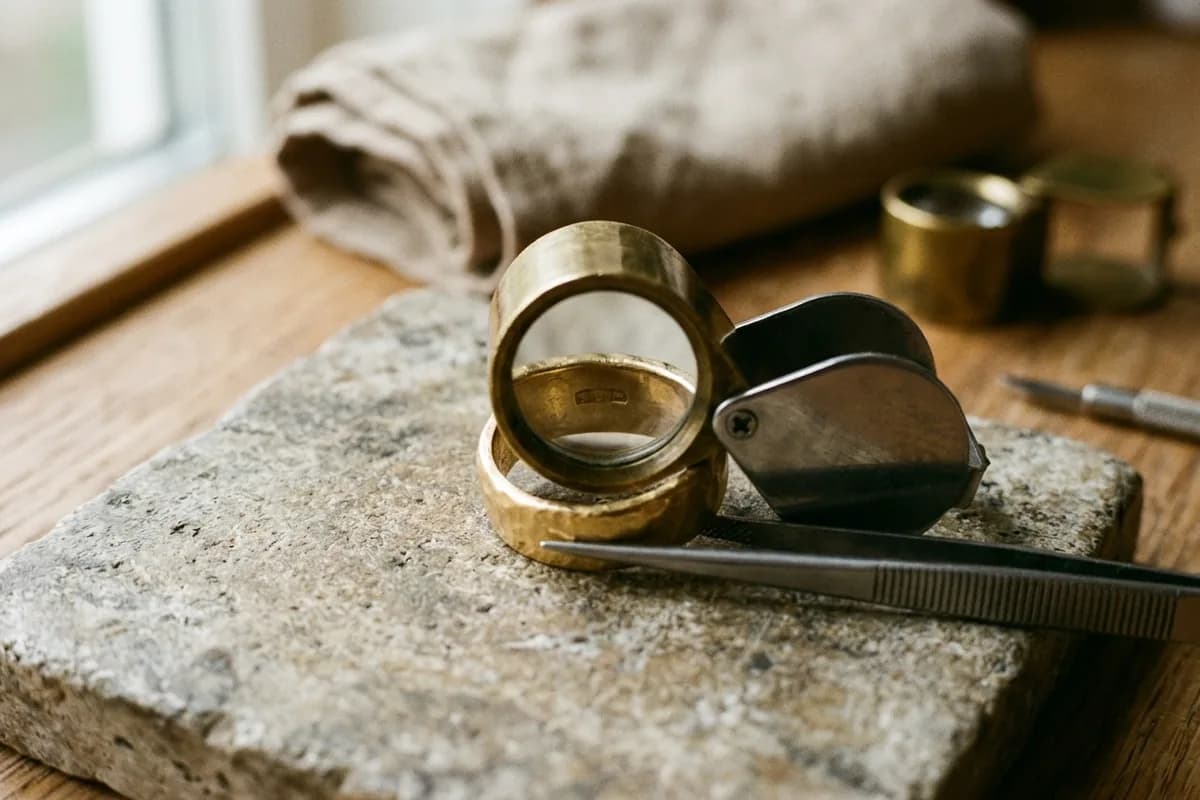
- Gold: 375 (9k), 585 (14k), 750 (18k) and 916 or 999 for higher purities
- Silver: 925 for sterling silver, 800 or 835 on some older European pieces
- Platinum: 950 or PT950
- Plated: GP, GEP or HGE mean gold plated or electroplated, RGP means rolled gold plate and GF means gold filled; none of these is solid gold
Simple checks at home
Clasps, settings and finish
Diamonds and gemstones
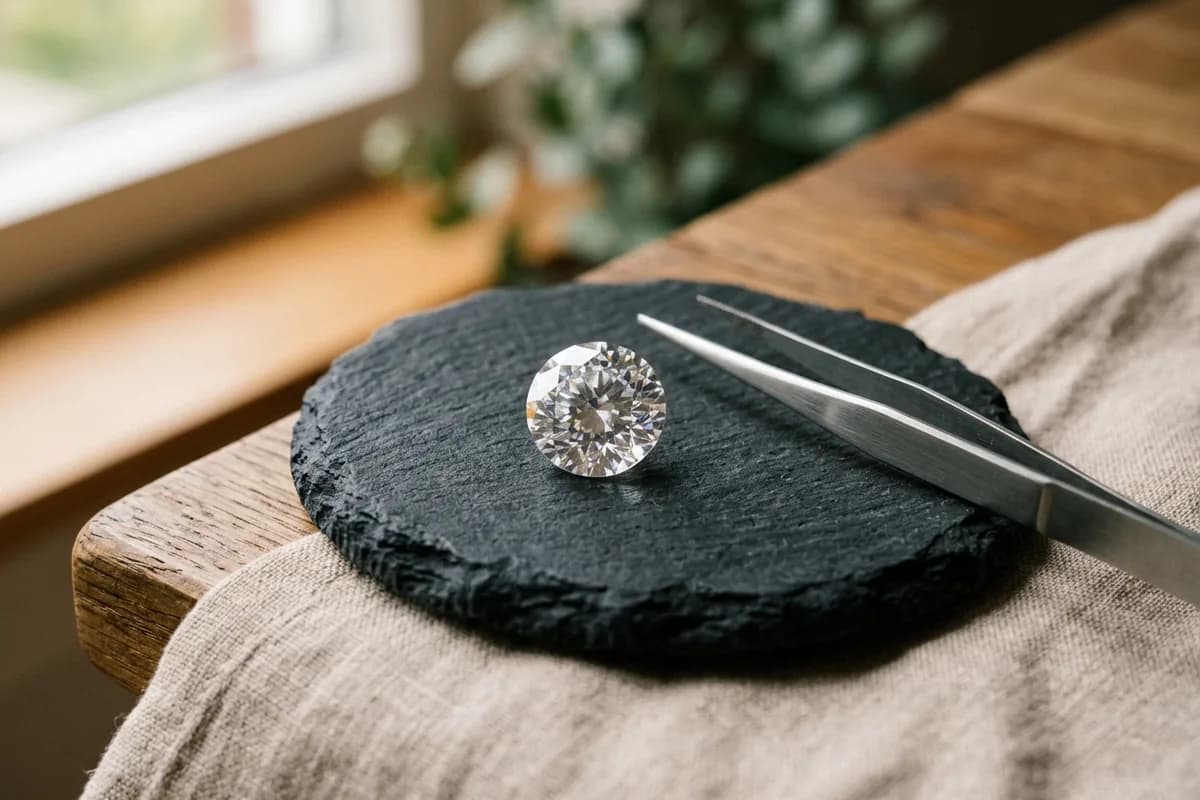
A grading report from a recognised laboratory describes a stone's weight, colour, clarity and cut. Many laboratories let you check a report number online, and some laser-inscribe that number on the girdle of the diamond.
Photos to take for a check
- Hallmarks and stamps, as close as your camera can focus
- Clasps and settings
- Any engravings
- Certificates or grading reports, if you have them
Jewelry is small and shiny: use soft, indirect light and tap to focus on the stamp itself.
Next up

How to check a luxury watch
4 min read
Related reading
Antiques
Furniture, clocks, ceramics and metalwork: how construction, wear, marks and repairs reveal whether a piece is as old as it is claimed to be.
Close-ups
The small details are where genuine and fake items differ most. How to capture logos, engravings, labels and serial numbers sharply enough to read.