
Authentication
How to check a luxury watch
Movement, weight, dial, case back, serial numbers and papers: how to judge a luxury watch, and which details are worth a close-up photo.
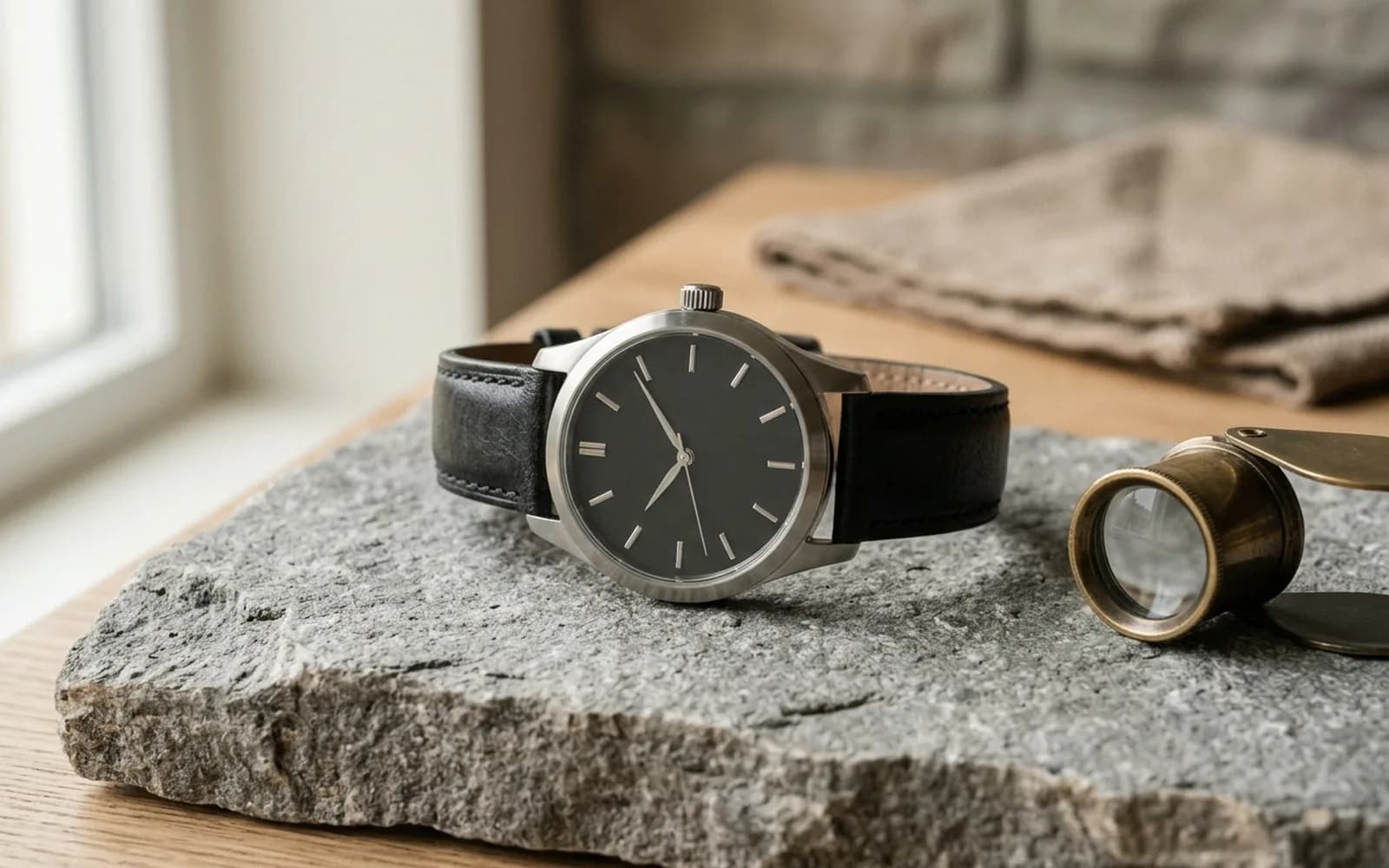
In short
- The way the seconds hand moves tells you what kind of movement is inside.
- Use a loupe or your phone's zoom.
- Serial and reference numbers sit in places that depend on the brand and the age of the watch: between the lugs, on the case back, or on the inner ring of the dial.
Listen to the movement
The way the seconds hand moves tells you what kind of movement is inside.
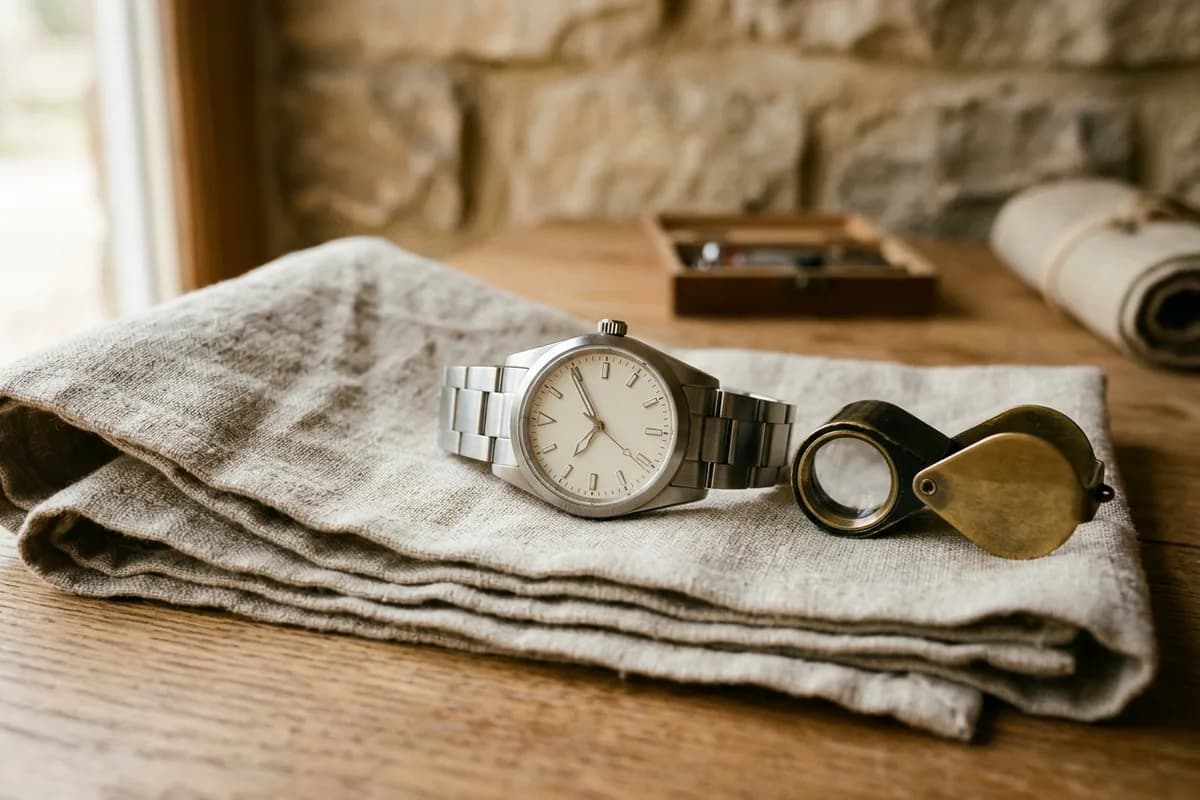
- A mechanical or automatic watch sweeps: the seconds hand moves in many small steps each second, so it looks almost smooth
- A quartz watch ticks once per second
- Rattling, grinding or a seconds hand that stutters or skips markers is a warning sign on any watch
Weight and finishing
The dial, close up
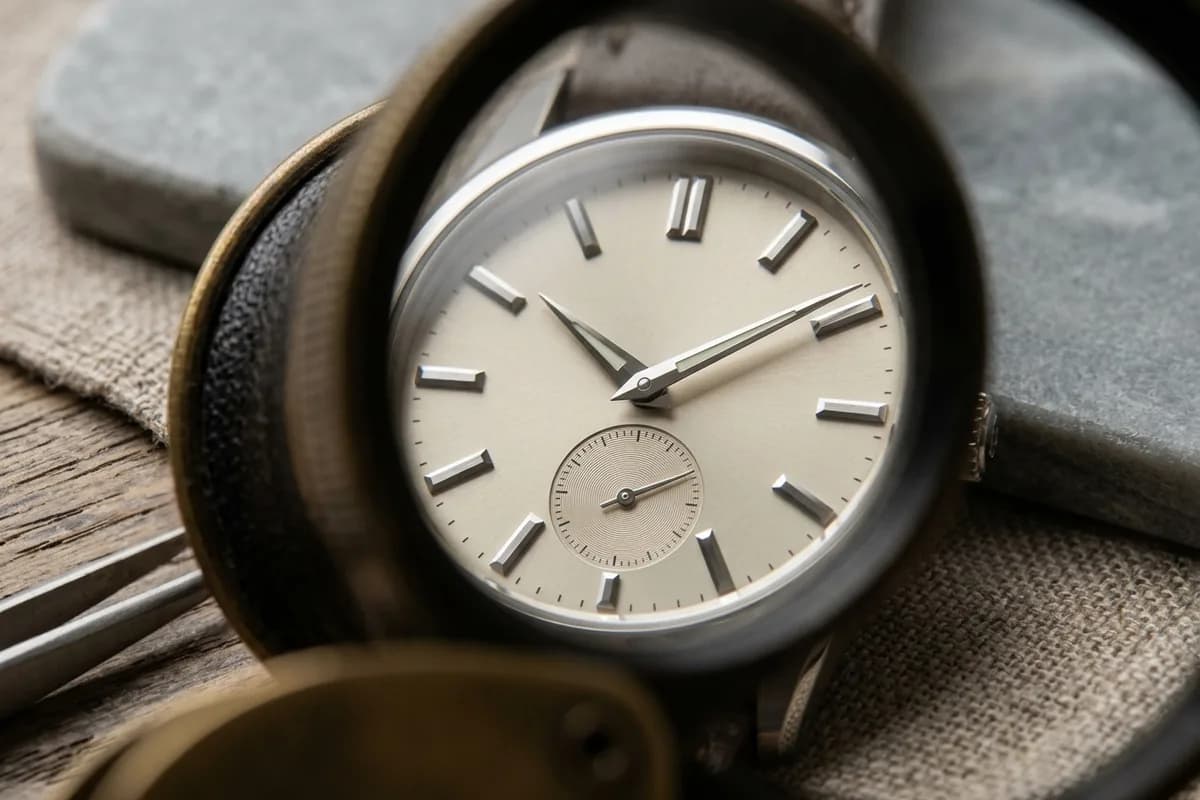
Use a loupe or your phone's zoom. Genuine dials are printed with great care, and this is where many fakes fall short.
Case back, serial and reference numbers
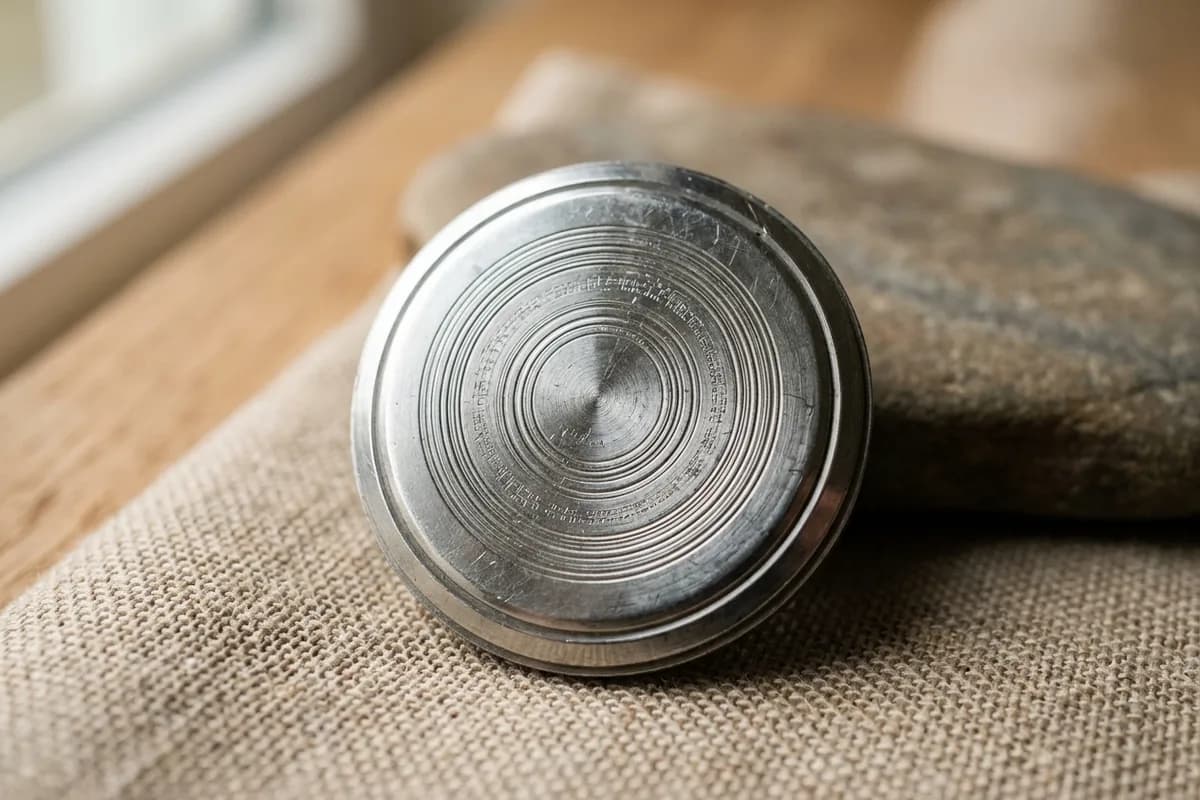
Serial and reference numbers sit in places that depend on the brand and the age of the watch: between the lugs, on the case back, or on the inner ring of the dial. Engravings should be crisp and deep, not shallow or sandy-looking.
Papers, box and history
Box, warranty card, receipt and service records add confidence and value, but they are copied too. They help most when the details all agree with the watch.
- The warranty card shows the same serial and reference as the watch
- The dealer named on the papers exists and sells that brand
- Service papers come from the brand or a known watchmaker
Photos to take for a check
- The dial, straight on and in focus
- The case back and its engravings
- The crown and the clasp
- The serial and reference numbers
- The box and papers, if you have them
Turn off the flash and tilt the watch slightly to avoid glare on the crystal. Glare can hide exactly the printing you want to show.
Next up
How to check jewelry: hallmarks, clasps and stones
4 min read
Related reading
Antiques
Furniture, clocks, ceramics and metalwork: how construction, wear, marks and repairs reveal whether a piece is as old as it is claimed to be.
Close-ups
The small details are where genuine and fake items differ most. How to capture logos, engravings, labels and serial numbers sharply enough to read.