Authentication
How to check stamps: perforations, watermarks and gum
Perforations, watermarks, printing method, gum and cancellations: the checks collectors use, and when to get an expert certificate.
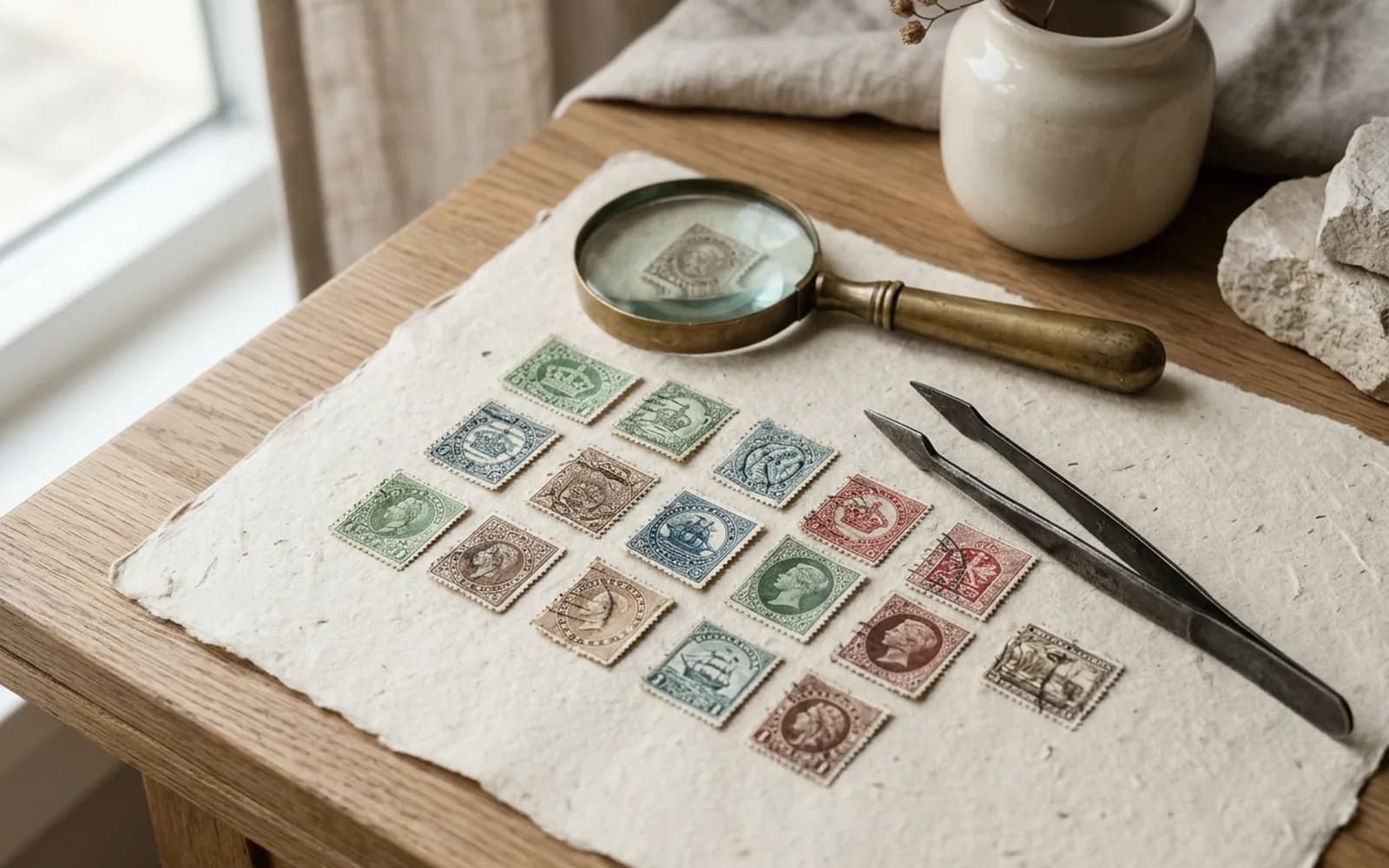
In short
- Perforations are measured as the number of holes in 2 cm, using a perforation gauge.
- Many classic stamps are printed on watermarked paper.
- Under a loupe, the printing method is often clear.
Perforations
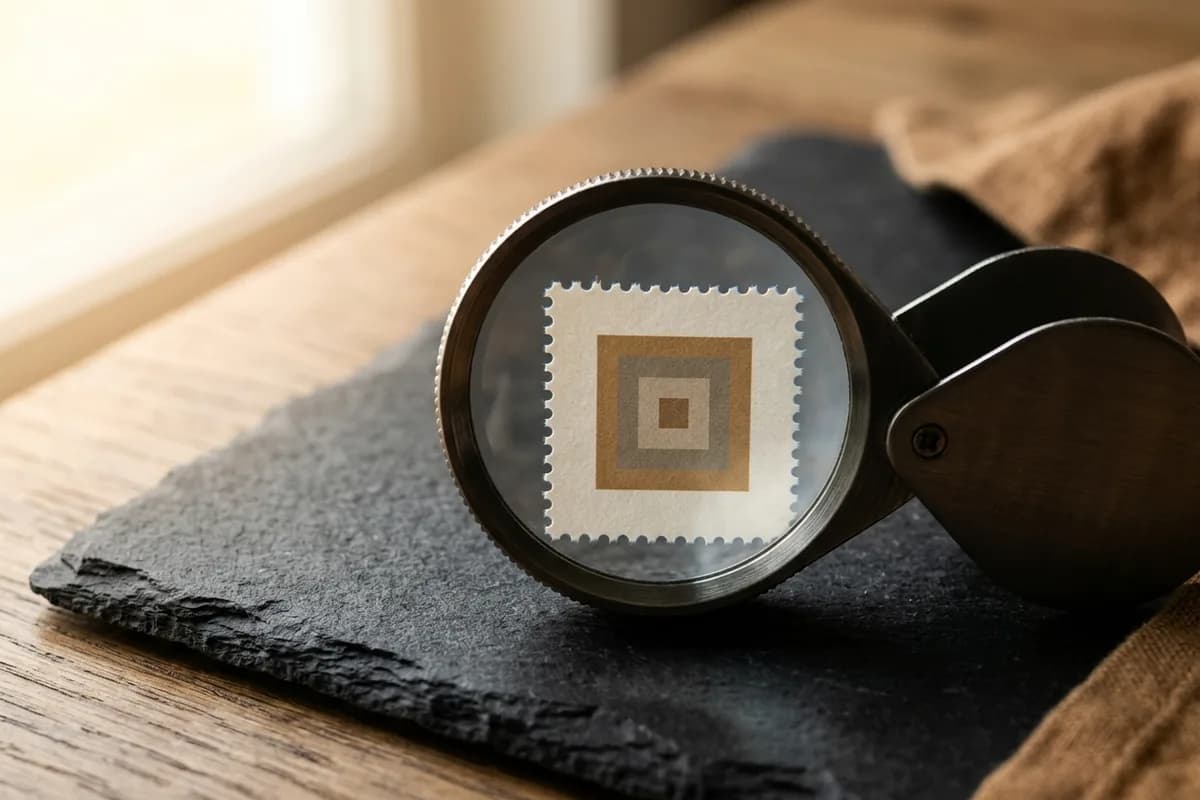
Perforations are measured as the number of holes in 2 cm, using a perforation gauge. Many varieties differ only by perforation, so forgers sometimes add or trim them.
Watermarks and paper
Many classic stamps are printed on watermarked paper. A watermark tray or watermark fluid makes it visible without harming the stamp.
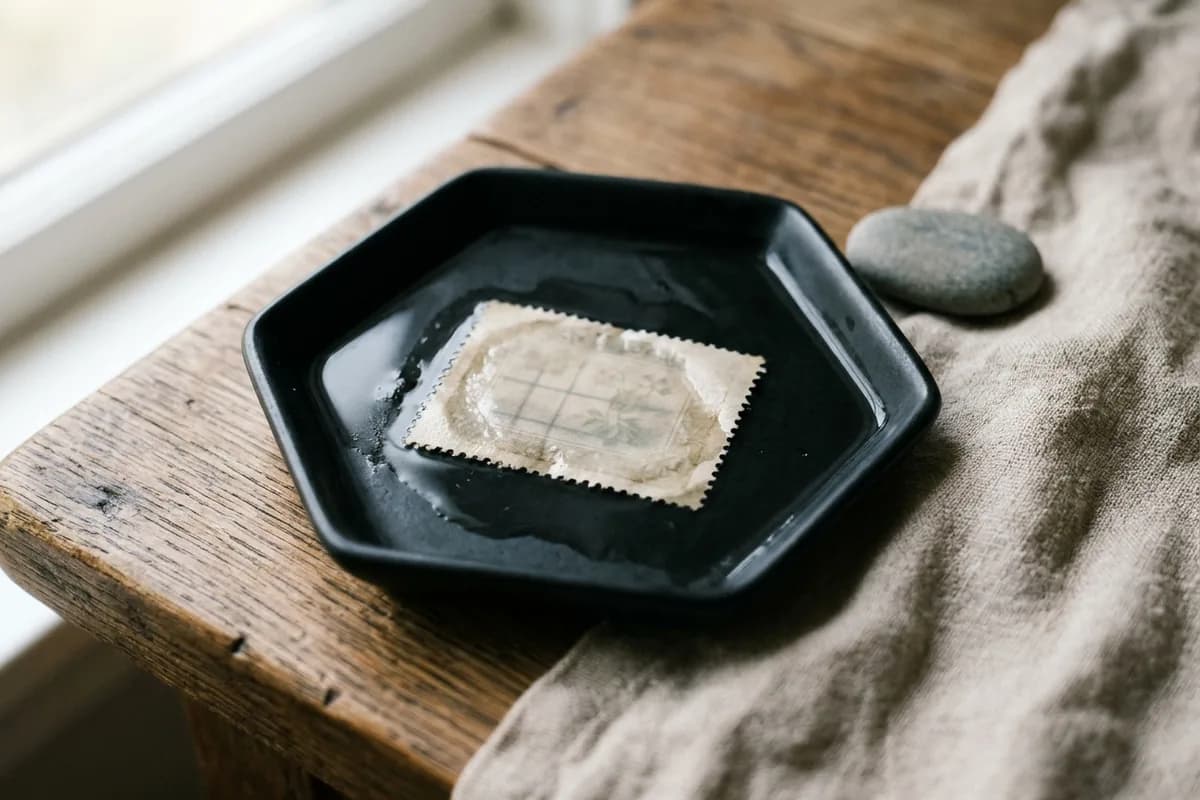
- The watermark design and its position match the variety
- The paper type and thickness fit the issue
- On modern stamps, UV light can show coatings and phosphor bands that should be there
Printing method
Under a loupe, the printing method is often clear. Engraved stamps have raised ink you can feel and see; lithographed and photogravure stamps are flat. A forgery of an engraved stamp is often printed flat.
Gum and cancellations
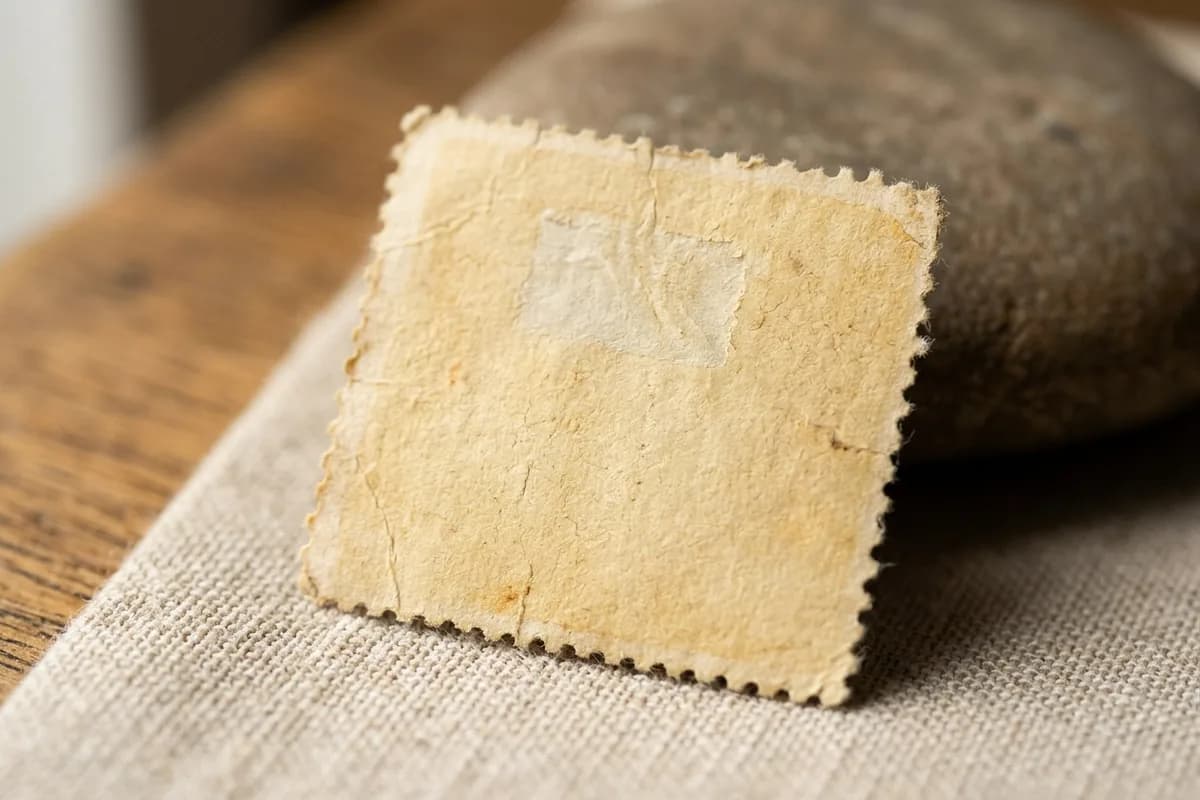
- Original gum has the texture and sheen typical for the issue; regummed stamps often look too shiny or show gum on the tips of the perforations
- Hinge marks lower the value of unused stamps but do not make them fake
- Cancellations on valuable used stamps should be the right type, date and town for the period, with ink that sits naturally on the paper
Expert certificates
For valuable stamps, a certificate from a recognised expert committee or expertising service is the normal standard. Ask for one, check that it matches the stamp exactly, and confirm it with the issuer if in doubt.
Photos to take for a check
- The front of the stamp, flat and evenly lit
- The design and printing, close up
- The back, showing the gum or hinge marks
- Any certificate that comes with it
Next up

How to check antiques: age, wear and repairs
4 min read