
How to tell if a Louis Vuitton bag is real

Canvas, Vachetta leather, stitching, the heat stamp, hardware and date codes: how to tell if a Louis Vuitton bag is real, and what the chip changed.

Authentication7 min readUpdated
Leather handbags in brown, tan, olive and grey lined up on a wooden shop shelf.
7 min left
ContentsThe short answer

The short answer

To tell if a Louis Vuitton bag is real, check that the details agree with each other: the canvas pattern, the Vachetta leather, the stitching, the heat stamp, the hardware and the date code, or on newer bags the chip. No single detail proves a bag is genuine, because the better fakes copy codes and stamps. What counts is whether everything matches the exact model and year.

Canvas: pattern and symmetry

Most Louis Vuitton bags are made of coated canvas, not leather. It feels firm, with a fine grain, and the print is sharp, never blurry or shiny like plastic.

  • On many models the Monogram is symmetrical, with the left and right halves of the front mirroring each other
  • The LV initials are not awkwardly cut off along the top edge or in the middle of the front; partial logos are normal at some side seams and under leather trims
  • The pattern continues neatly across seams and pockets, and Damier checks run straight and line up at the seams

Vachetta leather and its patina

Many Monogram bags, such as the Speedy and the Neverfull, have handles and trims in Vachetta, a natural, untreated cowhide. It starts out pale beige and slowly darkens to a honey brown with light, air and handling. This change of colour is called patina.
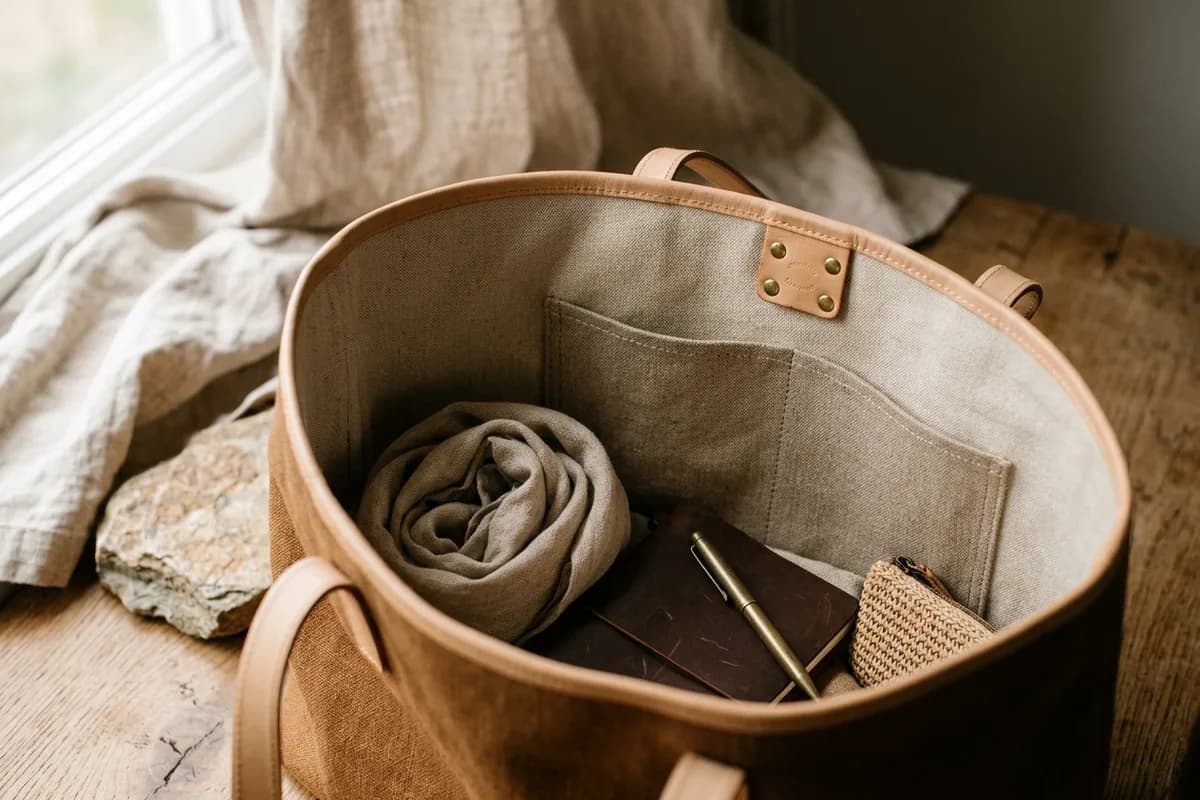
A tote with pale natural-leather handles and trim, and a small leather tab inside
  • A new bag has light, even Vachetta, not dark brown from the start
  • On a used bag the colour has deepened gradually, usually most on the handles
  • The leather looks natural, not glossy, sticky or like plastic, and on many classic models its edges are sealed with a neat, dark reddish glaze
  • Water marks are normal on used Vachetta; leather that stays perfectly pale after years of use is not

Stitching: colour and count

On Monogram bags with Vachetta trim, the thread is usually mustard yellow; other lines use thread that suits their own leather and canvas.
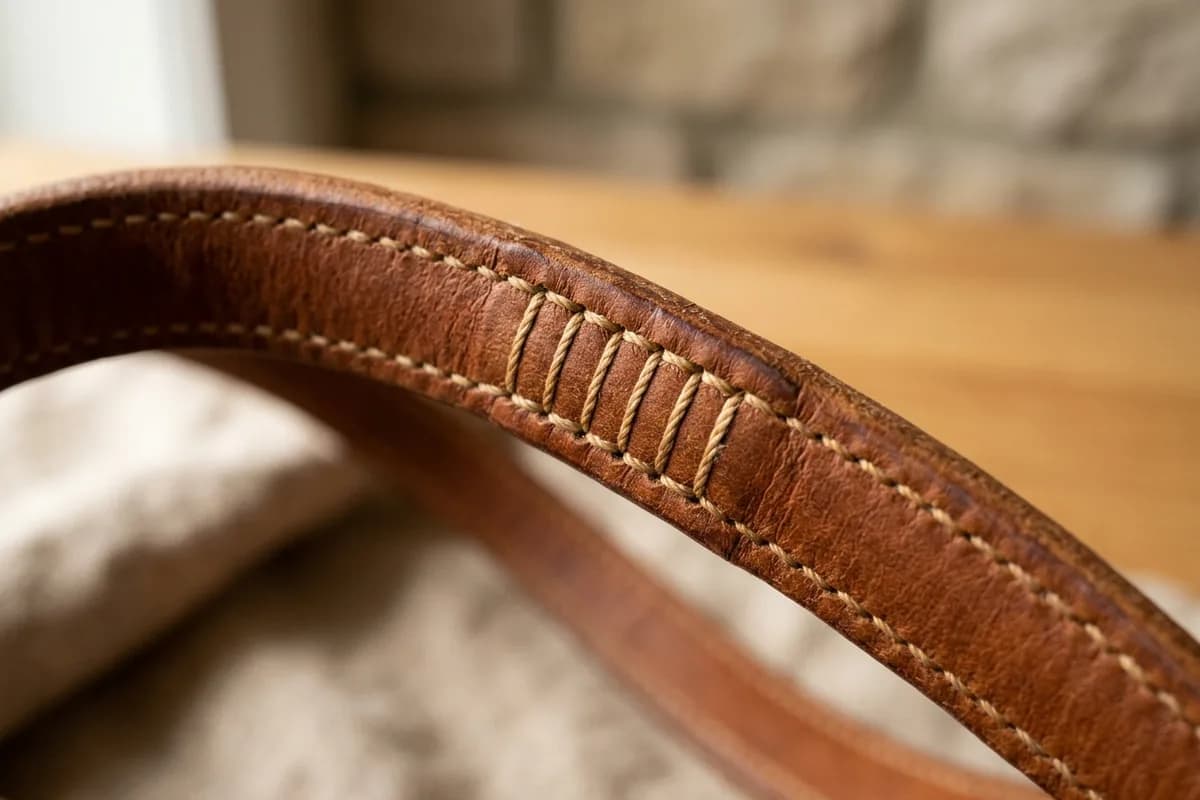
Even stitches along a leather handle
  • Every stitch is the same length and slightly slanted, in straight, evenly spaced rows
  • The thread colour is right for the model and the same all over the bag
  • There are no loose ends, double rows or messy back-stitching where you can see it

The heat stamp

Inside most bags, on the lining or a leather tab, there is a heat stamp. On most bags it reads LOUIS VUITTON, the ® symbol, Paris, and made in followed by the country. This is where fakes most often get the lettering wrong.

  • The O's are very round, noticeably wider than the other letters
  • The two T's in VUITTON sit so close together that they almost touch
  • The L has a short tail, and the letters are thin, crisp and evenly spaced
  • The stamp is evenly pressed, straight and centred, neither faint nor burnt deep into the leather

Bags are also made in Spain, the USA and a few other countries, so made in Spain is fine in itself; the country should agree with the date code.

Hardware

  • Zips, rings, rivets and clasps feel solid and heavy for their size, not hollow or light
  • Engravings on zip pulls, rivets and clasps are crisp and evenly deep, and the plating does not flake on a new bag
  • On models sold with a padlock and keys, the number stamped on the lock matches the number on the keys

Date codes: how to read them

From the early 1980s until around 2021, most Louis Vuitton pieces were stamped with a date code showing where and when they were made. It is not a serial number, so many bags share the same code. Look for it on a small leather tab, along an inside seam or in a pocket.

  • From about 1990, most codes are two letters followed by four digits
  • The letters stand for the workshop, and so the country, where the bag was made; they should agree with the country on the heat stamp
  • From about 2007, the first and third digits give the week of the year and the second and fourth give the year: in a code ending 2108, the 2 and the 0 make week 20, and the 1 and the 8 make 2018
  • From about 1990 to 2006, the same digits give the month instead of the week; codes from the 1980s look different

Newer bags: a chip instead of a code

Since around March 2021, Louis Vuitton has used an NFC chip embedded in the item instead of a date code. The chip is meant to be read by the brand; you cannot confirm a bag with an ordinary phone app.

  • A bag made in 2021 or later with no date code is normal
  • A date code that points to 2022 or later is a red flag, because codes were phased out during 2021
  • A phone that detects a chip shows only that some chip is there, not that the bag is genuine

Photos to take for a check

Use daylight or even indoor light, with no flash and no filters. These are the shots that carry the most evidence:
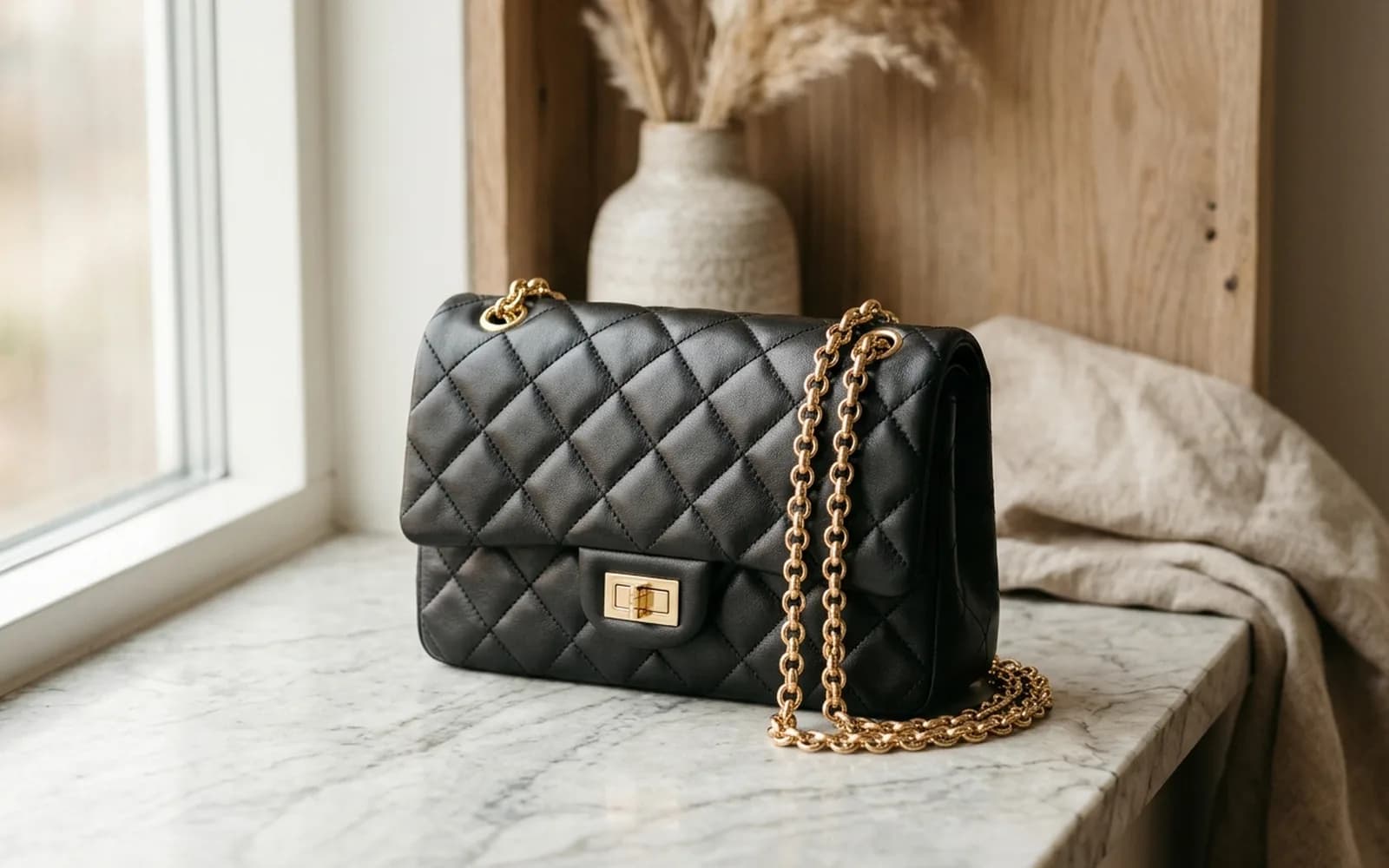

The front of the bag, straight on
The base and its corners
Inside, with the heat stamp or tab
Dust bag, cards and tags
  1. Add close-ups of the heat stamp, the date code, a handle tab and a zip pull
  2. Run a quick VerifAI check for a first verdict and the key findings
  3. For an expensive bag, use Deep VerifAI: it reads up to 8 photos and gives you a full report and a certificate you can share

Was this helpful?