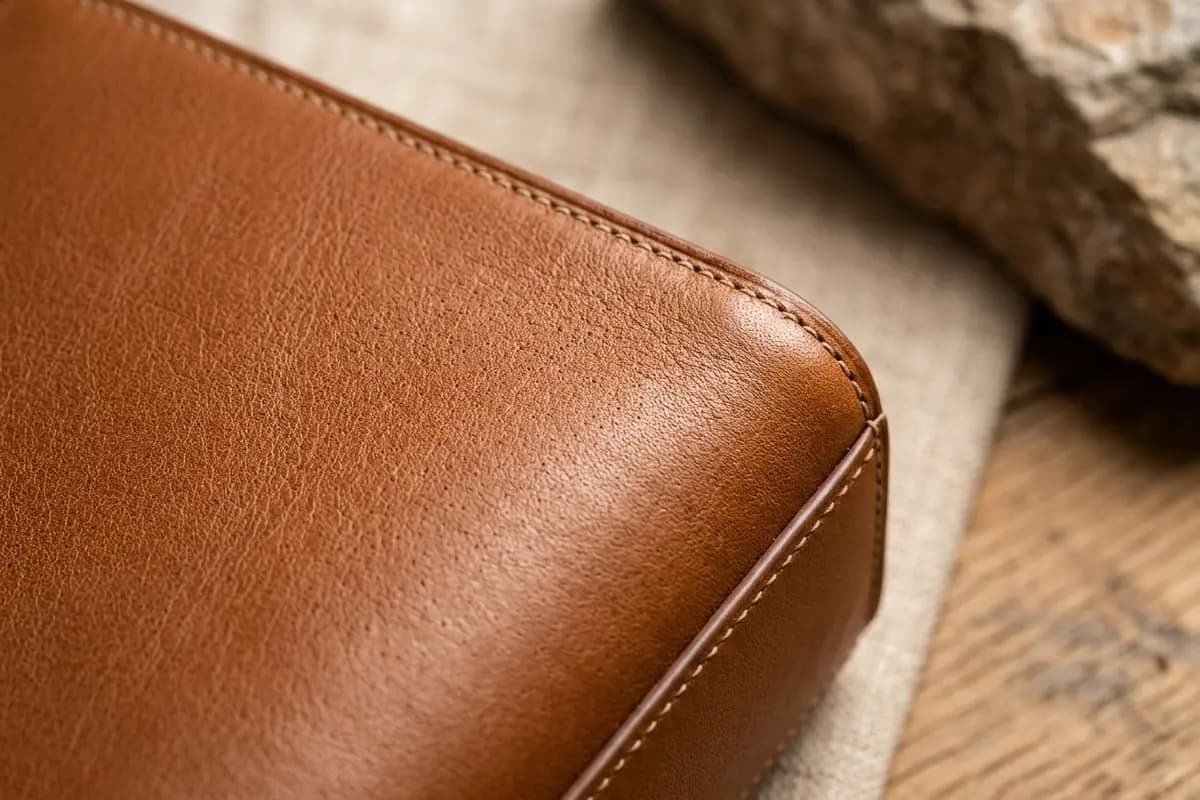

How to tell if a Coach bag is real

The creed patch, serial and style numbers by era, Signature canvas, hardware and stitching: how to tell if a Coach bag or purse is real, new or vintage.

Authentication7 min readUpdated
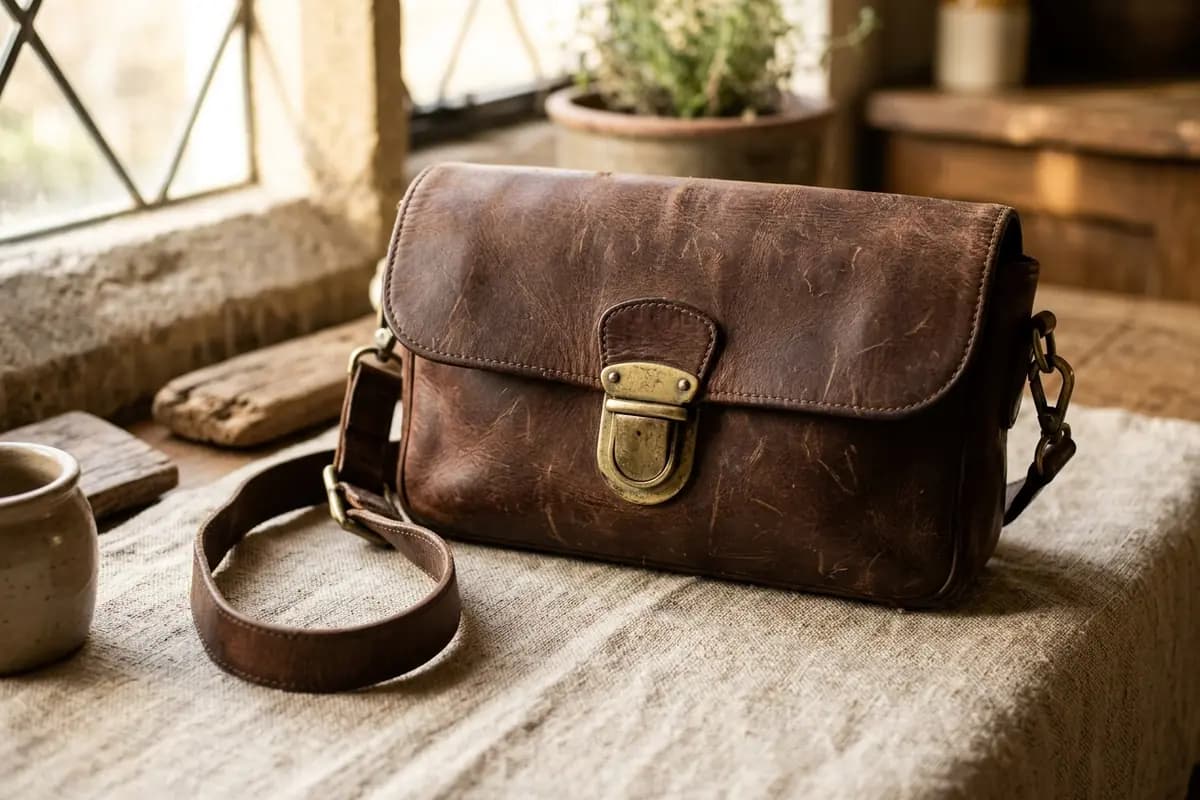
A well-worn brown leather crossbody bag with a brass clasp and an adjustable strap, on a linen-covered table by a window.
7 min left
ContentsThe short answer

The short answer

To tell if a Coach bag is real, start with the creed patch inside: on most bags it is a neatly stitched leather patch with clean, centred, correctly spelled text, and any number on it, or on a small white tag, should fit the bag's era. Then check the leather or Signature canvas, the hardware and the stitching. A creed or serial number proves nothing on its own, because fakes copy them, and some genuine pieces have none, so judge the whole bag.

The creed patch

The creed is the small leather patch sewn inside most Coach bags since about the 1970s. It is embossed with a short paragraph about the bag's leather and craftsmanship, and on many bags a number at the bottom.
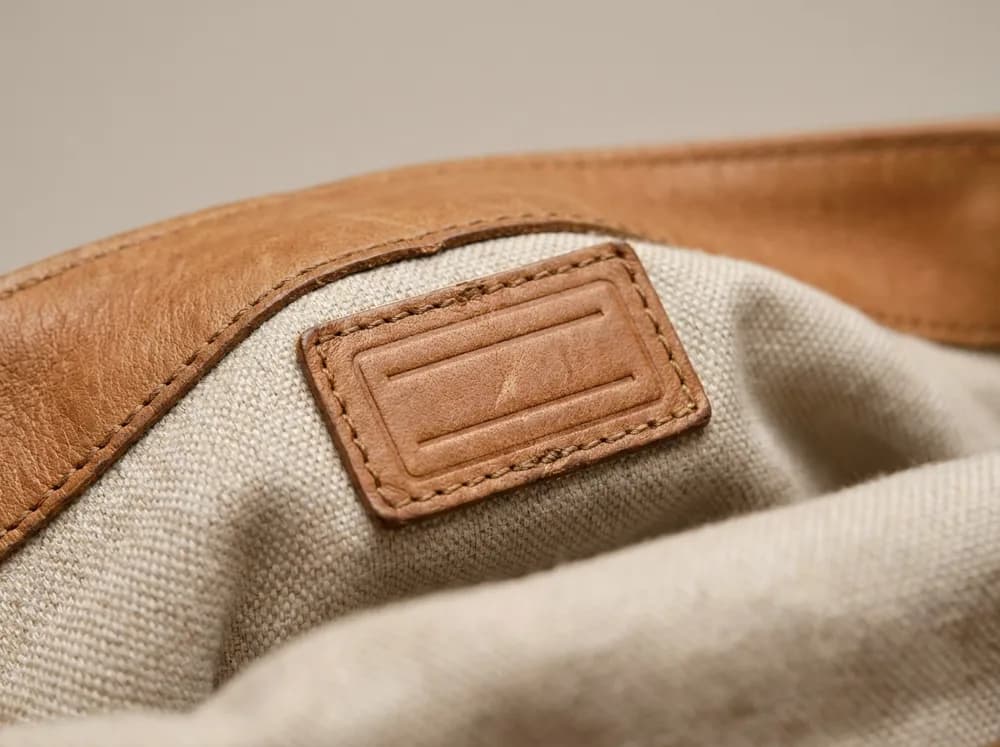
A stitched leather patch with a plain embossed border, inside a canvas-lined bag
  • The patch is real leather, stitched down evenly around its edges, and sits straight
  • The embossing is clean, even and deep enough to read, never blurred, shallow or printed on
  • The text is centred and correctly spelled; typos, odd line breaks or clumsy wording are strong warning signs
  • The country fits the era: bags from the 1970s and 80s usually name New York City or the United States, while most newer bags are made outside the US, often in countries such as China, the Philippines or Vietnam

Serial and style numbers by era

Before 1994, the number on the creed was a true serial number for that bag. Since then it has been a production code plus a style number, so many bags share the same one.

  • Before the 1970s, most bags have no number; from the 1970s to the early 1990s, the number is digits only, usually after No.
  • From 1994 to the mid-2000s, a letter gives the month, a digit the year and the next character the factory, then comes a dash and a four-digit style number: K8P-9870 means October 1998, factory P, style 9870
  • From the mid-2000s, codes are longer, with a five-digit style number after the dash, such as B1182-16808
  • From around late 2014, many bags carry the code on a small white fabric tag in a seam or pocket instead of on the creed, and the format changed again around 2020
  • An F after the dash marks a bag made for Coach outlets; it is a genuine Coach product, not a sign of a fake

Signature canvas and leather

Coach works in leather and in its Signature canvas with the repeating C pattern. Fakes often get the pattern almost right and the material wrong.

  • The C pattern is crisp, evenly spaced and symmetrical, with rows running straight and level across the bag
  • The pattern lines up neatly at seams and pockets and is usually centred on the front panel
  • The canvas feels firm and tightly made, never thin, flimsy or blurry like a cheap print
  • Leather feels thick, supple and natural; vintage glove-tanned leather softens and darkens with age, while modern pebbled leather has an even, natural grain

Hardware, turn-locks and zips

Hardware is one of the fastest tests, because counterfeiters save money on metal.
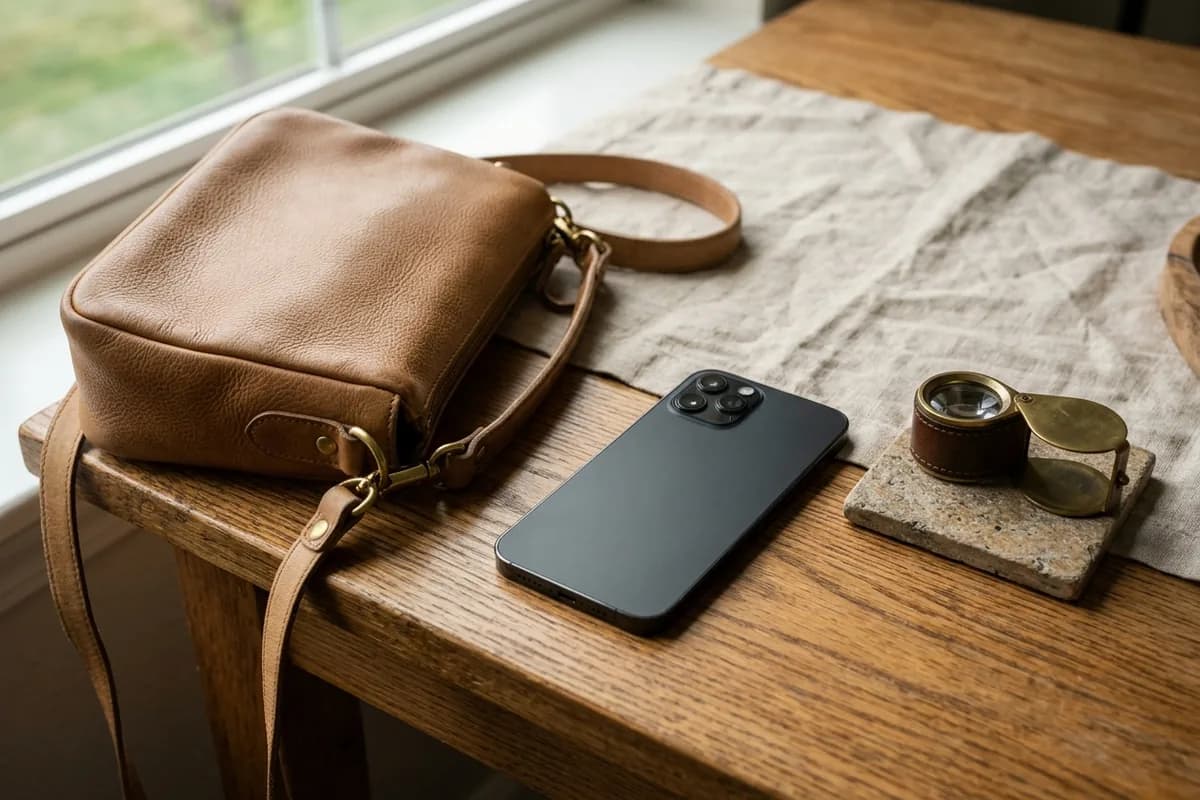
A tan leather crossbody bag with brass clips, next to a phone and a loupe
  • Buckles, rings, clips and feet feel heavy and solid, not hollow or light; on vintage bags they are usually solid brass
  • The turn-lock, a Coach signature since the 1960s, turns smoothly and has a rounded, well-shaped knob, not a blocky or sharp-edged one
  • Engraved COACH lettering and C logos are deep and precise, with an even finish and no flaking on a newer bag
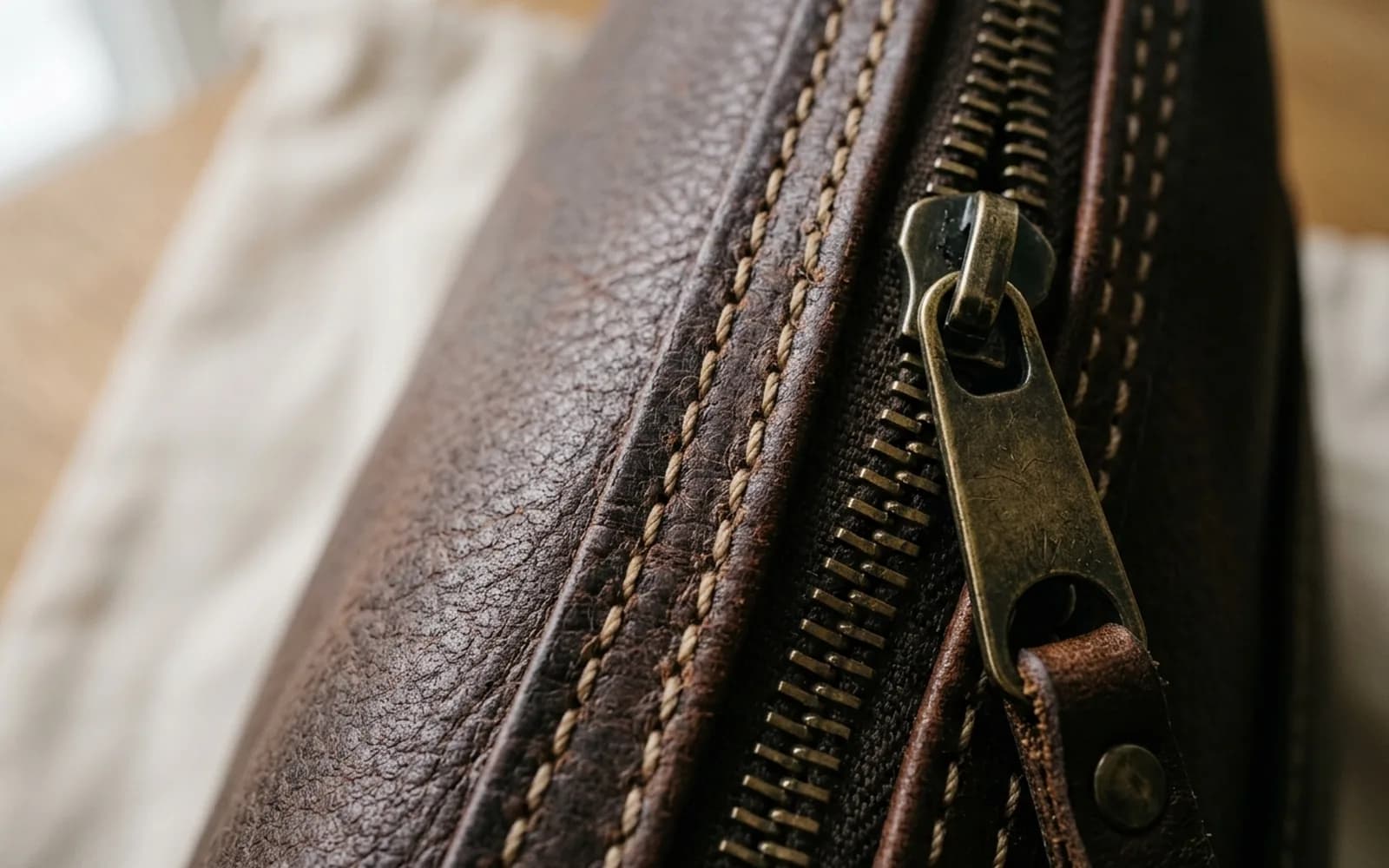
  • Zips glide smoothly with cleanly made pulls; on vintage bags they are typically from YKK or Ideal

Stitching and the hangtag

Even stitching along the corner of a tan leather bag
  • Stitches are even in length and spacing, in straight lines that follow the edges
  • The thread colour suits the leather or canvas, and handles and strap ends are firmly reinforced
  • Edges are smooth and neatly finished, without fraying or glue marks
  • Many Coach bags come with a leather hangtag on a ball chain; its COACH lettering should be crisp and centred, and the chain solid

Checking a vintage Coach bag

Vintage Coach, mostly from the 1970s to the 1990s, is collected and widely copied. A few extra points help here.
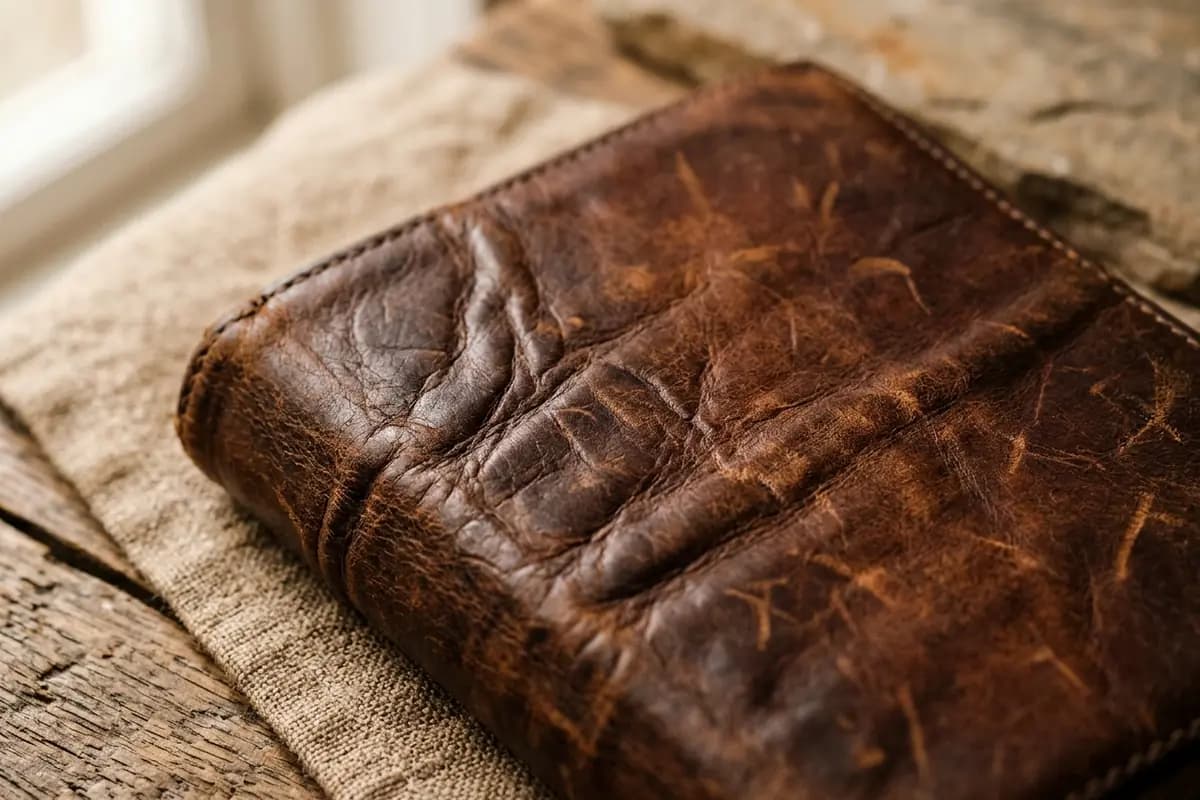
A worn brown leather wallet with deep creases and scuffs
  • The leather has aged naturally, softer and darker with a patina, and does not crack or peel like coated plastic
  • A creed number made only of digits points to a bag from before 1994; a number with letters points to 1994 or later
  • The wear is consistent: corners, handles and edges show the most use, and the creed has aged with the rest of the bag
  • Some 1990s pebbled-leather bags, such as the Dakota and some Sheridan styles, have no number at all

Photos to take for a check

Use daylight or even indoor light, with no flash and no filters. These are the shots that carry the most evidence:

The front, with the logo or turn-lock
The base and its corners
Inside, with the creed patch
Hangtag, cards and the dust bag
  1. Add close-ups of the creed patch, any small white fabric tag, the hardware and a stretch of stitching
  2. Run a quick VerifAI check for a first verdict and the key findings
  3. For an expensive or rare vintage bag, use Deep VerifAI: it reads up to 8 photos and gives you a full report and a certificate you can share

Was this helpful?