
How to spot fakes and fake sellers on Facebook Marketplace

Seller checks, fake AirPods tests, safe meetups and payment traps: how to spot fakes and scams on Facebook Marketplace before you hand over money.

Spot fakes6 min readUpdated
A tan leather crossbody bag, a dark smartphone and a brass loupe on a wooden table by a window.
6 min left
ContentsThe short answer

The short answer

To spot fakes on Facebook Marketplace, check the seller's profile and ratings, compare the price with what the item really sells for, and ask for photos of labels, serial numbers and the item from every side. Then inspect and test the item in person, in a busy public place, before you pay. Avoid payments you can't reverse, because most Marketplace deals don't come with the protection that big resale apps offer.

Why Marketplace needs extra care

Most Marketplace sales are informal, local deals between people, often paid in cash or through payment apps. Facebook offers Purchase Protection on many orders placed with checkout on Facebook, but its help centre says local pickups and payments made outside checkout don't qualify, and some categories and very high-value orders are excluded. For most face-to-face deals, your own checks are your protection.

Check the seller's profile

  • The profile has been around for years, with a real photo, friends and posts that look like a real person
  • There are Marketplace ratings, and they mention items as described
  • Their other listings make sense together, not dozens of “brand new, sealed” phones, earbuds and designer bags
  • Their location matches where they say the item is

Watch for stories built to rush you: they're moving abroad tomorrow, selling for a relative, or have “lots of people interested”. Pressure is a sales tool, not a reason to hurry.

Check the listing and photos

  • The price is in line with recent sales of the same model, not a fraction of it
  • The photos are the seller's own, not stock images or pictures copied from another listing
  • Popular items, such as AirPods, sneakers or designer bags, are shown with their labels, codes and box
  • The description is specific about the model, its age and where it was bought

Fake AirPods on Marketplace

AirPods are among the most copied items on Marketplace, and a sealed box proves nothing: fakes come shrink-wrapped too. Only agree to buy if you can open and test them when you meet.
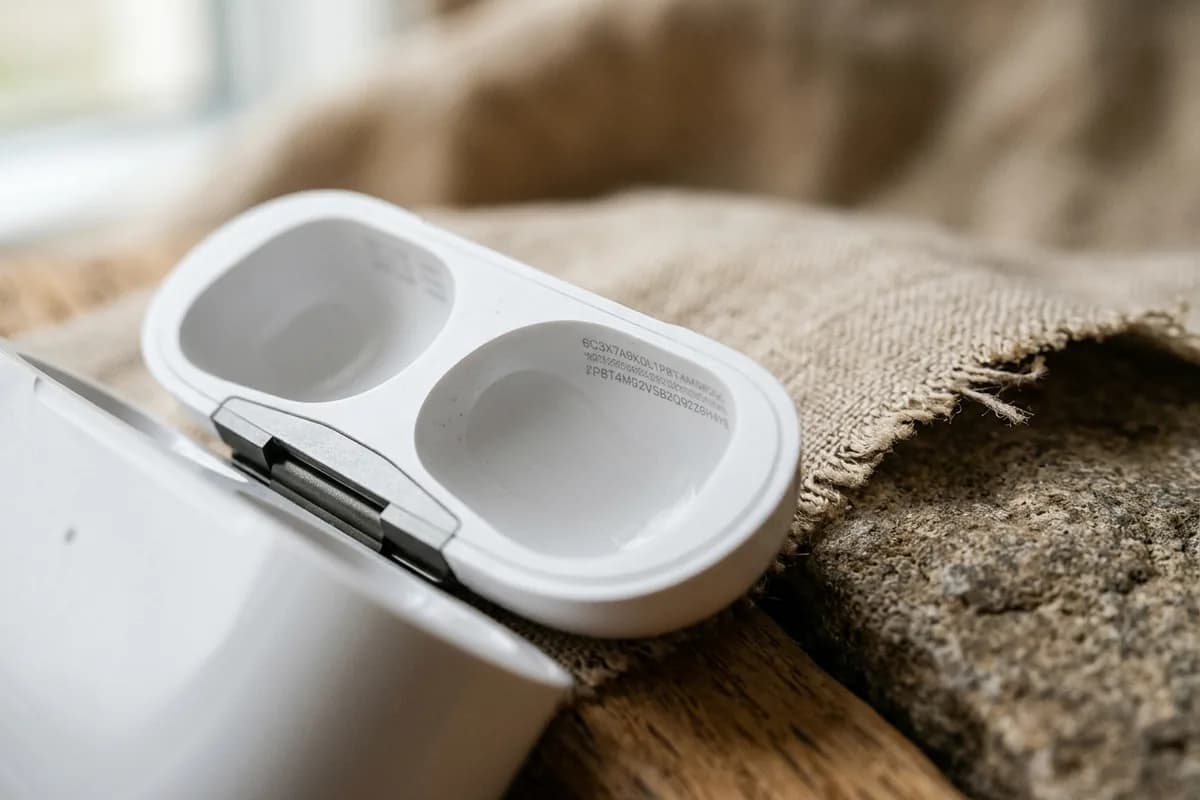
An open earbud case with small printed text inside the lid: compare it with the serial number in your phone's settings
  • Pair them with your phone and open their settings: the model name and firmware details match the AirPods you're buying
  • The serial number in the settings, the one on the case and the one on the box all match
  • Apple's online coverage check shows exactly the same model and generation
  • Features the model should have, such as noise control, work properly, and the sound is clear
  • The case feels solid, the hinge moves smoothly and the lid snaps shut

A pairing animation on an iPhone is not proof on its own, because many fakes show one. Our guide to fake AirPods covers more checks.

Meet safely

  • Meet in a busy, well-lit public place in daytime; some police stations offer safe spots for online trades
  • Bring a friend, or at least tell someone where you're going and share your location
  • Don't go to a stranger's home, or invite them to yours, for a small deal
  • Take your time: inspect the item, test electronics with your own phone and charger, and compare serial numbers with the photos you were sent
  • Pay only once you are happy, and only for the item you actually checked
A café table by a window, with a leather bag on a chair and a magnifier beside a coffee cup: a public place where you can take your time

Payment risks and common scams

Fakes aren't the only risk on Marketplace. Many scams target the payment itself:

  • Deposits to “hold” an item before you've seen it, usually by bank transfer or a payment app
  • Payment apps used with friends-and-family settings, gift cards or crypto, which you usually can't get back
  • Requests to read out a verification code sent to your phone, which can be used to take over your accounts
  • Links to fake delivery or payment pages that ask for your card details
  • Sellers who offer shipping but want to be paid outside Facebook's checkout

If you've been sold a fake

  1. Keep the item, the box, screenshots of the listing and all your messages
  2. Report the listing and the seller's profile, using the menu on the listing or the profile
  3. If you paid with checkout on Facebook, contact the seller first, then open a Purchase Protection claim from your Marketplace orders if it isn't resolved
  4. If you paid by card, or with a payment service that offers buyer protection, ask them about a dispute
  5. If you lost money to a scam, report it to your local police or consumer protection agency

Menus, eligibility and time limits differ by country and can change, so check Facebook's help centre for the current process.

Check a Marketplace listing with VerifAI

Before you travel to meet anyone, open VerifAI, choose Check a listing and paste the link to the Marketplace listing. VerifAI reads the seller's photos and flags details that don't match the genuine item. If the listing only opens when you're signed in, save the seller's photos and upload them instead. If the photos are vague, ask the seller for:
  • Labels, serial numbers and codes, close up
  • The item from every side, in daylight
  • A photo with a handwritten note showing your name and today's date
  • The box and the receipt, if they have them
  1. Paste the listing link into Check a listing, or upload the seller's photos for a free quick check
  2. At the meetup, start a Live check: in a two-minute camera talk, an AI agent tells you what to look at and how to angle the item
  3. For an expensive item, run a Deep VerifAI check, from $2.99, for a full report and a certificate you can share

Was this helpful?