

How to spot fake Pokémon cards and fake packs

Font, holo, card feel, the light test and sealed packs: how to spot fake Pokémon cards and packs, and why you should skip the rip test.

Authentication7 min readUpdated
A jeweller's loupe, a small black torch and a tape measure laid out on a linen cloth.
7 min left
ContentsThe short answer

The short answer

To spot a fake Pokémon card, compare it side by side with a card you know is genuine from the same set or era: the text and font, the colours on the back, the holo pattern, and how the card feels and flexes. A light test can help but is not proof, and the rip test destroys the card, so skip it. For sealed packs and boxes, check the wrap and the seams, and buy from sellers you can trust.

Text, font and symbols

Printing mistakes are the quickest giveaway. Look the card up in the official card database on the Pokémon website, or in a reliable price guide, and check every detail against it.

  • The name, HP, attacks, damage and card text match the official version of that card exactly
  • The font matches genuine cards from the same era, with even spacing and no odd letter shapes
  • There are no spelling or grammar mistakes, and Pokémon is written with the accent on the é
  • Energy symbols are the right size and style and sit neatly in line with the text
  • The set symbol, the card number and the rarity symbol are present and correct for that set
  • The copyright line and the illustrator's name at the bottom are sharp and readable

The back of the card

Fakes often get the back wrong, because its colours are hard to match.

  • The blue is deep and rich, with darker swirls, not pale, washed out or purple
  • The Poké Ball and the Pokémon logo are sharp, with clean edges
  • The border colour is even all the way round
  • Held next to a genuine card from the same era, the back looks the same

Off-centre borders are common on genuine cards too, so centring alone doesn't make a card fake.

Holo, foil and texture

Holographic cards are where fakes look most obviously wrong, once you know what to expect for that set.
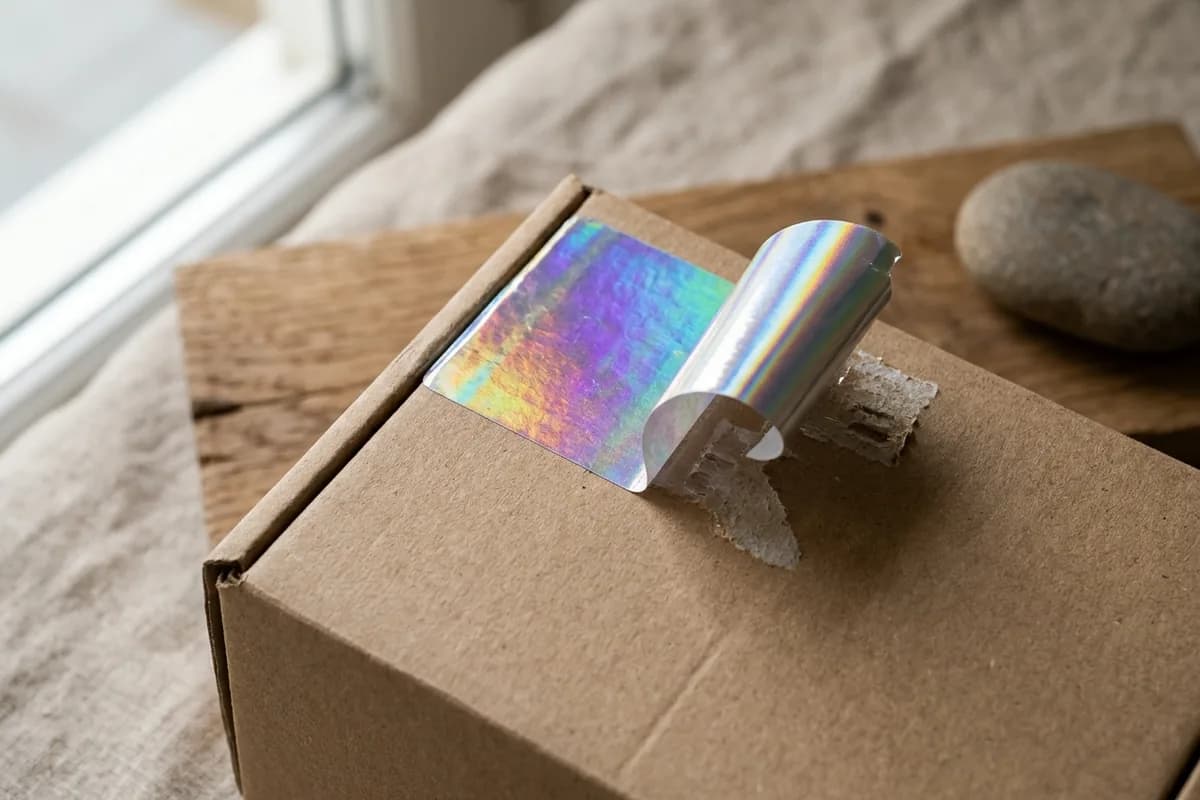
A holographic seal peeled back on a cardboard box: real foil shifts colour smoothly as you tilt it
  • The holo pattern matches the one used for that set and rarity; patterns differ from era to era
  • The foil is only where it belongs: on the artwork for a classic holo, around it for a reverse holo
  • The shine moves and changes as you tilt the card, instead of looking flat and printed on
  • On many modern full-art and special rare cards you can feel a fine texture with your fingertip; fakes of these cards are often smooth and glossy

Feel, thickness and edges

  • Genuine cards have a smooth, semi-matte finish; many fakes feel waxy, plasticky or too glossy
  • A gentle flex makes a genuine card spring back; fakes are often flimsy or oddly stiff
  • A stack of ten suspect cards is the same height as ten genuine cards from the same era
  • The edges are cleanly cut and the corners evenly rounded

Under a loupe, the edge of many genuine cards shows a thin dark line in the middle of the card stock. It's a useful sign, but newer fakes can copy it, so treat it as one clue among several.

The light test, and why to skip the rip test

For the light test, dim the room and hold your phone's torch right behind the card. Genuine cards have a dark inner layer, so only a soft, dim glow comes through, while many fakes light up brightly. Always compare with a genuine card of the same era, because results vary between print runs and some newer fakes pass.

Sealed packs and boxes

Fake and resealed packs are common, especially from older and sought-after sets.

  • Booster packs are crimped neatly at the top and bottom, with even ridges and no glue, wrinkles or gaps
  • The pack art is sharp, the set name is right, and the wrapper isn't loose, oddly shiny or thin
  • Boxes are wrapped tightly, with neat folds; many recent official boxes use wrap printed with Pokémon branding, so compare it with photos from an official retailer
  • The price makes sense: a sealed box of a popular set far below market, or a bulk lot of “all rare” cards, is a warning

Buying cards on Vinted and other apps

Fake Pokémon cards turn up on Vinted, Facebook Marketplace and other apps, often in bulk lots.

  • The photos show the actual cards, front and back, not stock images or scans
  • The listing doesn't use words like “proxy”, “custom”, “replica” or “orica”, which mean unofficial cards
  • A “huge lot” of ultra rares at a bargain price is a red flag; real bundles are mostly common cards
  • For a graded card, the certificate number on the label can be looked up on the grading company's website, and the card, grade and label match what you see

Photos to take for a check

Use daylight or even indoor light, with no flash and no filters. Take the card out of a scratched or shiny sleeve if it's safe to do so, because glare hides details.

Front and back, flat and straight on, on a plain background
A corner and the border, close up
The print and small text through a loupe
Sealed product: every side of the box and its wrap
  1. Photograph the front and the back, flat and straight on
  2. Add close-ups of the text, the set symbol and card number, a corner, and the holo area at an angle
  3. Run a free quick check with VerifAI for a first verdict and the key findings
  4. For a valuable card, use a Deep VerifAI check, from $2.99, for a full report and a certificate you can share, or start a two-minute Live check where an AI agent guides you on camera

Was this helpful?